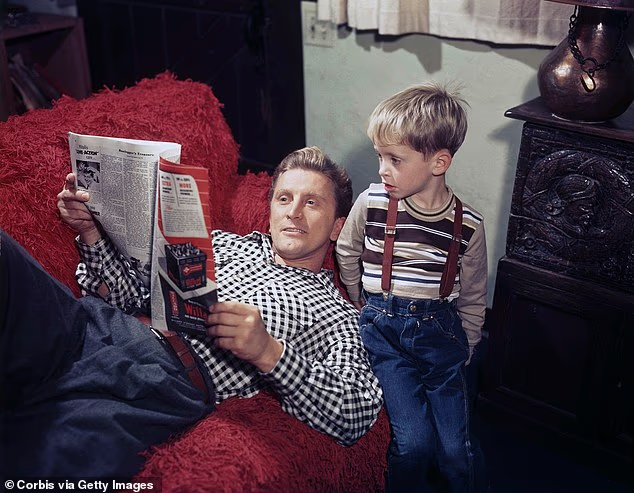
Michael Douglas has opened up about one of the most painful chapters in his relationship with his legendary father, Kirk Douglas, revealing how a difficult casting decision and an Oscar acceptance speech helped drive a wedge between them for years.
In his new memoir, One Helluva Ride, Michael reflects on producing the 1975 film One Flew Over the Cuckoo’s Nest, the adaptation of Ken Kesey’s novel that went on to win five Academy Awards, including Best Picture and Best Actor for Jack Nicholson.
But behind the movie’s extraordinary success was a deeply personal disappointment. Kirk had spent years trying to bring the novel to the screen and hoped to play its central character, Randle McMurphy. He believed the role could revive his career and potentially earn him the Oscar that had eluded him.
Michael, who was beginning to establish himself as a producer after working as an actor, initially pursued the project with the understanding that his father would star. However, turning the book into a film required outside financial backing, and the casting plan eventually fell apart.
The Decision That Broke Kirk Douglas’s Heart
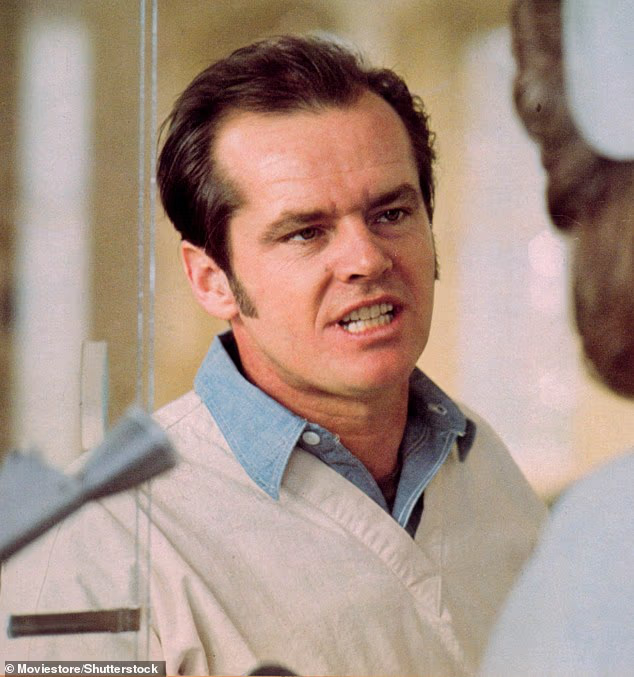
Michael joined forces with producer Saul Zaentz, who agreed to finance the film. Zaentz and director Miloš Forman, whom Michael helped select, both opposed casting Kirk as McMurphy, arguing that the actor was too old for the part.
Kirk was 57 at the time, while Nicholson, who ultimately landed the role, was 38.
Michael knew how much the character meant to his father. In his memoir, he explained that Kirk had entrusted him with a project he had long considered his own, making the decision especially difficult.
He also understood that without Zaentz’s financial support, the film might never be made. With studios and other financiers having passed on the project, Michael felt he faced a choice between keeping the production alive and preserving his original promise to his father.
Although Michael argued for Kirk, neither Zaentz nor Forman changed their minds. Looking back, Michael acknowledged that he ultimately agreed with their assessment.
“One of the hardest moments of my life was firing my dad from his dream role,” he wrote.
Michael then had to deliver the news to Kirk in person. He recalled seeing his father’s anger before Kirk fell silent. Kirk believed his son had betrayed him and should have fought harder to secure the role.
Michael was devastated by the reaction and recognized that the decision had caused lasting damage. The disagreement created an emotional distance between father and son that would take years to repair.
The Oscar Speech Made Matters Worse
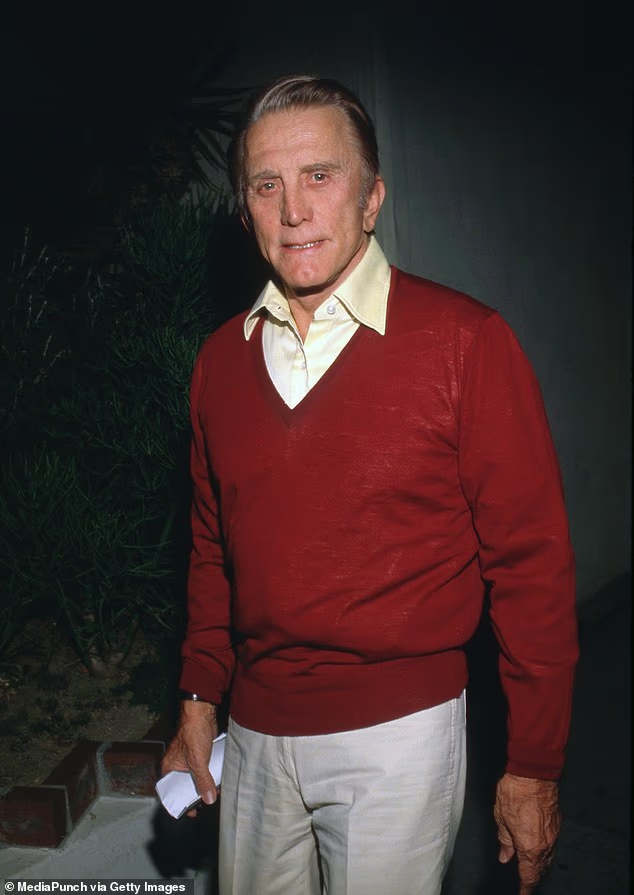
The tension deepened when One Flew Over the Cuckoo’s Nest triumphed at the 1976 Academy Awards.
As one of the film’s producers, Michael shared in its Best Picture victory with Zaentz. But during his acceptance speech, he failed to acknowledge Kirk, despite his father’s original efforts to bring the novel to the screen.
Michael revisited the omission during an interview on SiriusXM’s Radio Andy, admitting that forgetting to thank his father remained painful.
He also offered a more complicated explanation for the moment, acknowledging that his desire to establish himself professionally may have played a part.
Kirk had discovered the book and spent years trying to develop it for film. Michael eventually took over the project, made key production decisions and helped bring it to the screen with Zaentz.
Looking back, Michael felt he had been too young to fully recognize how important it was to publicly acknowledge his father’s contribution.
The omission compounded the earlier casting dispute. A film that became one of the defining achievements of Michael’s early producing career had also become a source of profound hurt within his family.
A Tragedy Helped Change Their Relationship
Despite the years of strain, Michael and Kirk eventually reconciled during the 1990s, developing a much closer relationship.
Michael pointed to a 1991 helicopter crash that seriously injured his father and killed two other people as a turning point in Kirk’s life. In his memoir, he described the experience as transforming Kirk from an actor constantly searching for his next role into a more reflective man who embraced his Jewish heritage, family and legacy.
Michael believed the ordeal changed his father for the better, and that the family recognized how profoundly Kirk had been affected by surviving it.
Their reconciliation allowed them to move beyond the resentment surrounding the film and the Oscars, although Michael’s latest reflections make clear how deeply those events had affected him.
Remembering Kirk Douglas’s Hollywood Legacy
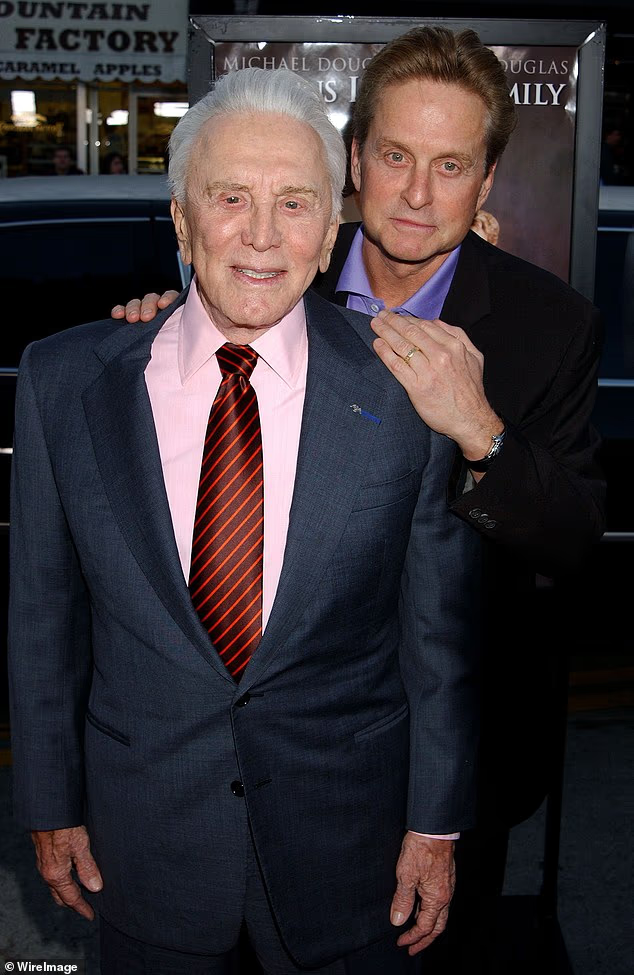
Kirk Douglas, one of Hollywood’s most celebrated stars, died in February 2020 at the age of 103. He was buried beside his second wife, Anne Buydens, in Westwood, California.
Before marrying Anne, Kirk was married to actress Diana Dill, with whom he welcomed Michael in 1944.
His remarkable screen career included acclaimed films such as Detective Story, Stanley Kubrick’s Paths of Glory, 20,000 Leagues Under the Sea and the historical epic Spartacus.
Although Kirk received three Academy Award nominations, he never won a competitive Oscar. The role of McMurphy, which he had hoped would finally bring him that honor, instead became the part that helped launch his son’s producing career while leaving a lasting mark on their relationship.
Michael’s account reveals the painful personal cost behind a celebrated Hollywood success: a decision he believed was necessary to get a film made, a father who felt betrayed, and an acknowledgment that came too late to prevent years of hurt.
Source: Compiled from various sources.